
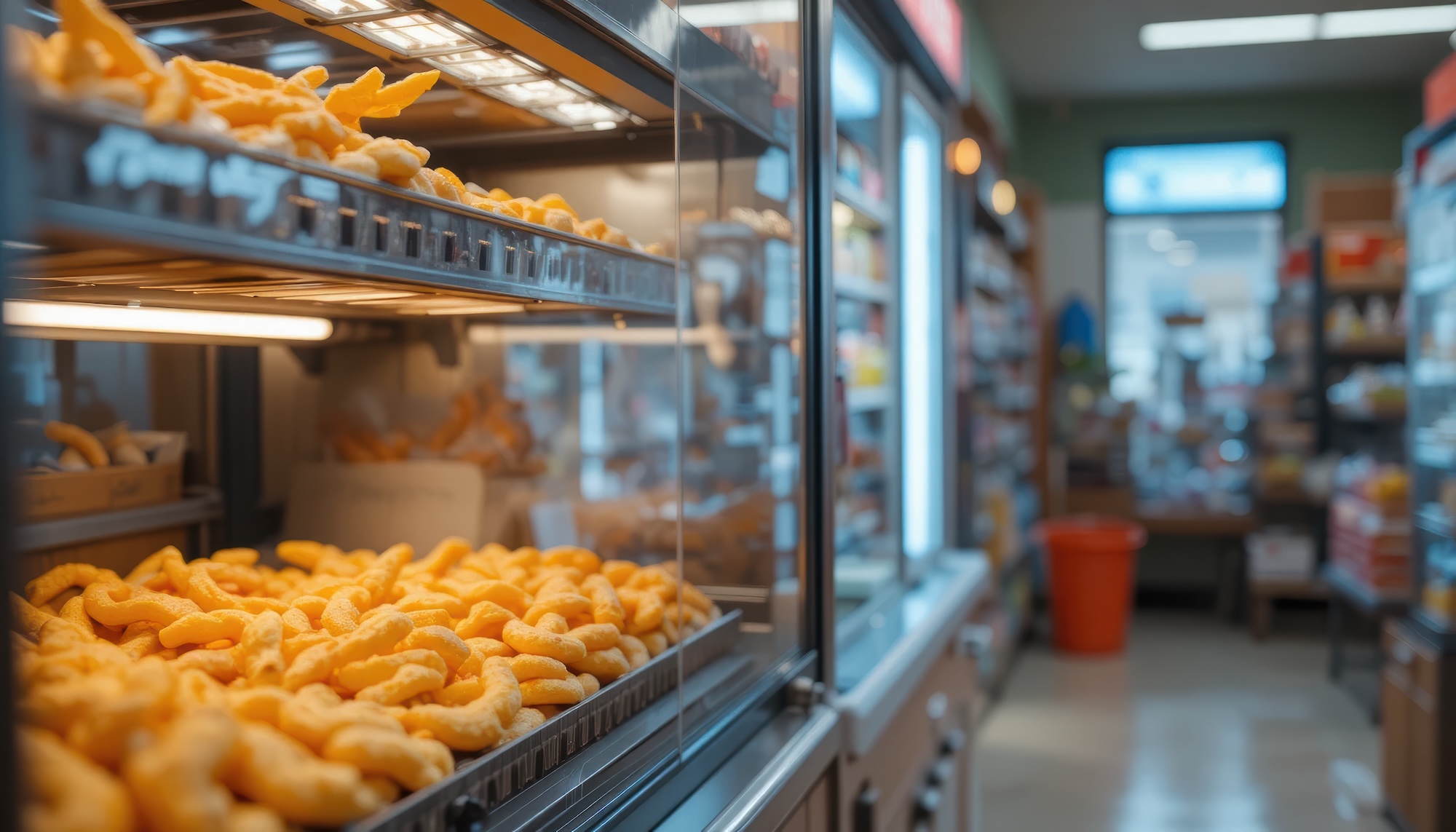


Convenience is not just top-up shopping anymore.
It is coffee on the way to work. Hot breakfast. Bakery mid-morning. Meal deal at lunch. Dinner solutions on the way home. And it all happens with tight labour, tight space, and zero patience for mistakes.
That is why Orderly fits so well. Orderly’s tools were built for food and beverage operations where demand is spiky, product is perishable, and the day is chaotic.
Convenience is now retail plus food service
The moment a store sells hot food, it stops being “simple retail”.
You are managing:
- Short-life stock that punishes poor ordering
- Production planning by day-part
- Hot-hold discipline and food safety routines
- Replenishment across peaks, not “once a day”
- Waste that can quietly wipe out margin
The hardest part is that customers still expect speed. They want QSR service levels in a convenience footprint.
What has changed: demand patterns are sharper
Food and beverage demand does not come in a smooth line. It comes in waves.
Breakfast. Lunch. After school. Evening.
If a store runs ordering and production on habit, the same loop repeats:
- Sell out at the peak
- Overproduce after the peak
- Waste increases
- Stock accuracy drifts
- Teams start guessing “to be safe”
- Margin leaks every day
What good looks like is boring, but effective:
- Forecasting by day-part, not daily totals
- Clear top-up triggers for hot food and bakery
- Simple cut-off rules that reduce late waste
- Waste capture that actually happens
The labour squeeze makes routine the product
When teams are stretched, standards only hold if the routine holds.
In food and beverage convenience, the routine protects:
- Food safety checks
- Hot-hold timings
- Cleaning cycles
- Replenishment
- Receiving discipline
- Waste capture
If those slip, availability and profit slip right behind them.
So the goal is not more work. It is less noise:
- Fewer manual checks
- More exception-based work
- A short list of critical tasks that never gets skipped
Where forecourts and EV charging fit in
This shift is even more obvious on forecourts.
Forecourts already have intense peaks and lots of missions in one visit. EV charging adds longer stays. That changes what customers buy and what they expect.
You end up serving two types of visit at once:
- Grab and go
- Dwell and browse
That matters because dwell time increases food and beverage opportunity, but it also increases the risk of getting your timing wrong. If customers arrive during a charging stop and the hot food looks tired or the coffee queue is chaos, you lose the big basket.
The answer is the same operational foundation:
- Day-part planning that reflects reality
- Availability on the hero lines at the right times
- Tight waste control
- Simple routines that survive a busy shift
Where Orderly fits
Orderly is known for performing in high-volume food and beverage environments.
So in convenience, the fit is natural:
- Predictive ordering to protect availability and reduce waste
- Inventory routines that people actually follow
- Task execution that keeps standards stable across day-parts
- Practical visibility that helps teams act, not just report
This is not “more tech”. It is fewer surprises and better decisions, every day.
A simple 30-day checklist you can steal
If you want a practical starting point:
- Pick your top 20 profit drivers
- Coffee inputs, bakery lines, hot food components, top chilled food-to-go.
- Map demand by day-part
- Morning, lunch, afternoon, evening. Keep it simple.
- Write production rules
- Top-up triggers. Cut-off times. Who owns the call.
- Make waste capture unavoidable
- If it is hard, it will not happen.
- Move to exception-based ordering
- Review what is weird, not every single line.
- Build a tight daily task list
- Receiving, replen, food safety, hot-hold discipline, critical cleaning.
Do those six things and performance improves fast, because feedback loops in food and beverage are immediate.
Contact us today to increase your convenience store profitability and reduce food waste.


.svg)


.svg)

.svg)
.svg)